
EAGLE LAWN CARE · LAWN CARE GUIDE
Signs Your Lawn Needs Aeration: How to Spot Compacted Soil in Eagle, Idaho
Hard soil, pooling water, shallow roots — this guide covers the signs your lawn needs aeration, simple tests to confirm compaction, and the best time to aerate in Eagle.
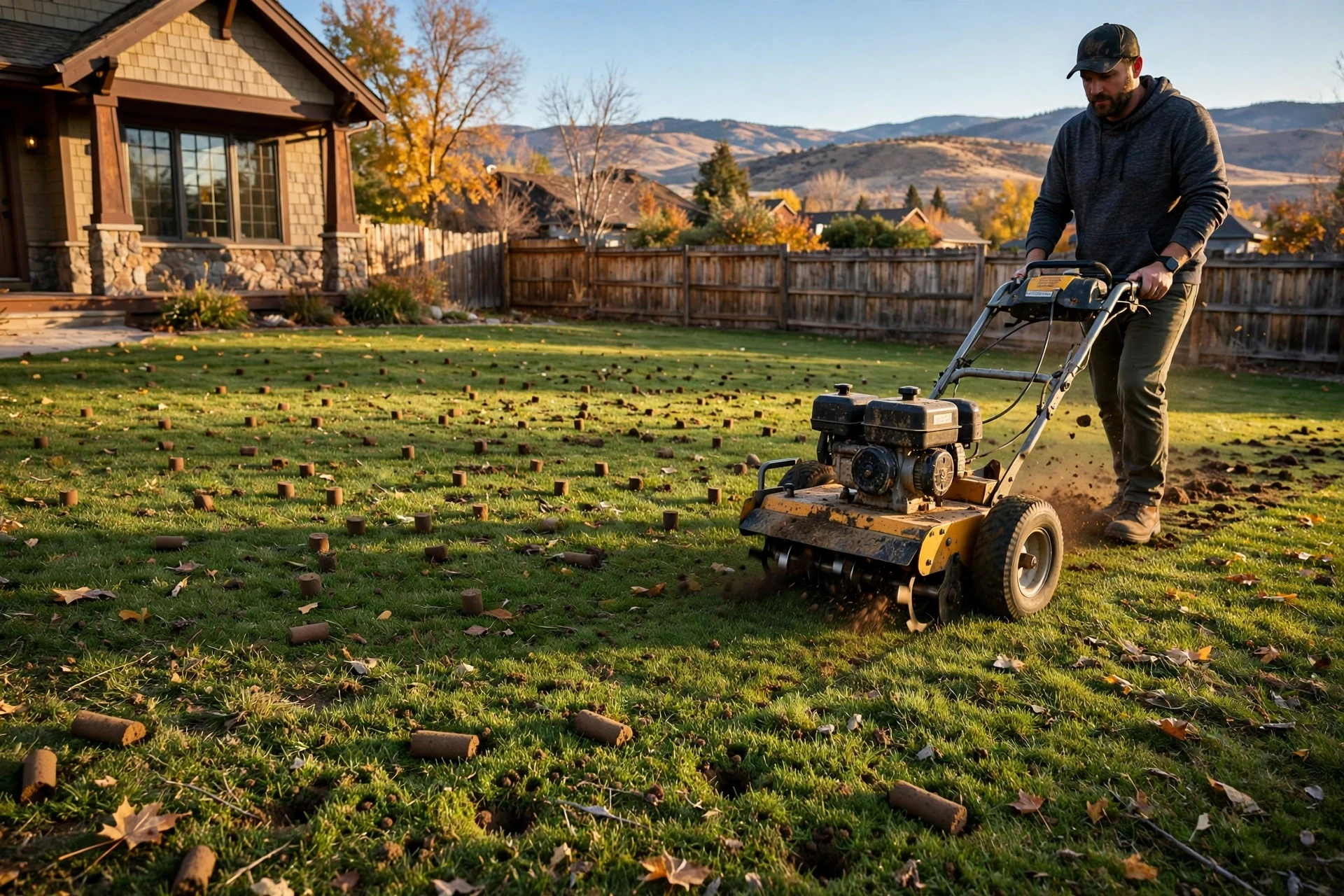
The clearest signs your lawn needs aeration are hard soil, water that pools or runs off instead of soaking in, and thin grass with shallow roots even though you water and mow correctly. One sign alone doesn’t prove compaction. Several together, plus a simple soil test, make it much more likely.
This guide shows you how to check your own yard, which look-alike problems to rule out first, and when aeration makes sense for cool-season lawns in Eagle and the Treasure Valley.
The Warning Signs, From Strongest to Weakest
Compacted soil has been pressed so tightly that air, water, and roots struggle to move through it. Some signs point to this directly. Others show up with many lawn problems. Learning to read the signs your lawn needs aeration starts with the strongest ones.
Stronger signs of compaction
Hard soil. A screwdriver or garden fork is difficult to push in, even when the soil is moist.
Water pooling or running off. Water collects on the surface or flows toward the sidewalk after short watering cycles instead of soaking in.
Shallow roots. When you pull a small plug of turf, the roots stay near the surface and stop where the soil turns dense.
Wear in high-traffic areas. Paths, play areas, and spots where mowers or equipment turn are often the first to compact and thin out.
Weaker signs (could be compaction or something else)
- Thin grass or bare patches
- A lawn that looks tired despite regular care
- Grass that dries out faster than the rest of the yard
- Weeds taking over open spots
Quick checklist
- ☐ Soil feels hard underfoot or resists a screwdriver
- ☐ Water pools or runs off during normal irrigation
- ☐ Roots are short and stay in the top layer
- ☐ Thin or patchy grass despite proper watering and mowing
- ☐ Heavy foot traffic, play areas, or frequent equipment use
- ☐ Clay-heavy soil or a newer home site where the ground was disturbed
If you check several boxes, especially the first three, compaction is a reasonable suspect. If you only check the thin-grass box, look for other causes first.
How to Check Soil Compaction at Home
You can test your lawn in about ten minutes. Do it when the soil is moist but not soggy. Bone-dry or frozen ground will feel hard no matter what, and that can mislead you.
Try the screwdriver test. Push a long screwdriver into the lawn. If it slides in easily, compaction is less likely. If it takes real force or stops short, the soil may be dense.
Pull a small plug. Use a spade to cut a small square of turf about six inches deep. Look at the roots. Healthy roots reach down into loose soil. Roots that are shallow and stop at a hard layer suggest compaction.
Watch how water behaves. Run your sprinklers for a normal cycle and see whether water soaks in or runs off. Note whether puddles form and how long they last.
Test several spots. Check a high-traffic area, a healthy-looking area, and a problem area. Compare them. Compaction is often uneven.
If a spot only shows one or two weak signs, hold off on aeration and check the next section.
Look-Alike Problems to Rule Out First
Thin or brown grass has many possible causes. Aerating a lawn whose real problem is something else won’t fix it.
| What you see | Could be compaction if… | Other possible causes | Quick check |
|---|---|---|---|
| Thin or bare patches | The soil is hard and roots are shallow | Uneven sprinkler coverage, grubs or pests, lawn disease, dog urine, shade | Look at sprinkler coverage; check turf roots for damage or pests |
| Water pooling | Surface water soaks in slowly everywhere | Low spots, poor grading, broken sprinkler heads | Check whether it pools only in low areas or across the lawn |
| Yellow or tired grass | Soil is hard and roots are shallow | Nutrient shortage, shade, watering too lightly or too often | Review your watering and mowing habits |
| Grass dries out fast | Roots are shallow in dense soil | Sprinkler gaps, high heat, thatch | Check coverage and dig a small plug |
Thatch is a different problem from compaction. Thatch is a built-up layer of dead grass and roots at the surface. Compaction happens in the soil underneath. A lawn can have one, both, or neither.
If you can’t tell which problem you have, a local lawn professional can inspect the yard. University of Idaho Extension offices serving Ada County also offer lawn and soil guidance.
Why Some Eagle Lawns Compact
Compaction has a few common causes, and some of them are more likely in this area.
Clay-heavy soil. Many Treasure Valley yards sit on clay-based soil that compacts more easily and drains slowly. Soils vary from yard to yard, though. Some properties have gravelly soil or a hardpan layer below the surface.
Disturbed ground at newer homes. Heavy equipment during construction can pack the soil, and a thin layer of topsoil over dense ground is a common setup for lawn problems.
Foot traffic and equipment. Kids, pets, mowers, and regular walking paths press the soil down over time.
Dry climate and irrigation. The Treasure Valley gets little rain, so lawns depend on irrigation. If water runs off compacted soil before it soaks in, roots may not get the moisture you intend to give them.
Core Aeration vs. Spike Aeration
Core aeration uses hollow tines to pull small plugs of soil out of the lawn. Spike aeration pushes solid tines into the ground without removing anything. University of Idaho Extension recommends core aeration, using a hollow-tine aerator.
| Core aeration | Spike aeration | |
|---|---|---|
| How it works | Removes small plugs of soil | Pokes holes without removing soil |
| Effect on compaction | Relieves it by creating space in the soil | Can push soil sideways and may worsen compaction in heavy soils |
| Best suited for | Established lawns, clay soil, heavy traffic | Light, sandy soil with mild compaction |
| What you’ll see | Soil plugs on the lawn for a week or two | Little visible change |
| Typical tools | Walk-behind or tow-behind machines | Spiked shoes, rollers, handheld tools |
The plugs left behind are normal. They break down on their own and don’t need to be raked up.
When to Aerate in Eagle and the Treasure Valley
Fall is the usual best window
Kentucky bluegrass and tall fescue are both cool-season grasses. They grow most actively in spring and early fall, and that’s when they recover best from aeration. University of Idaho Extension calls fall the best time in Idaho, with early spring as an acceptable alternative.
Irrigation also matters. Aerating while your system is still running lets you water the lawn beforehand and keep it moist afterward. Shutoff dates vary by irrigation district, so check yours before planning.
Soil moisture decides whether it works
Aeration works best when the soil is moist. Extension guidance suggests watering a couple of days beforehand. Very dry ground can stop the tines from pulling full plugs. Very wet ground can smear and compact further. If your soil is either extreme, wait for better conditions.
How often depends on the property
University of Idaho Extension describes yearly core aeration as typical for a lawn, with twice a year for lawns that have serious compaction from heavy traffic or heavy clay. A healthy lawn that drains well may not need it every year. Your schedule depends on your soil, how much the lawn is used, and what the tests show.
Combining Aeration With Other Lawn Care
Overseeding. Aeration opens the soil, which helps seed make contact with it. Fall aeration followed by overseeding is a common pairing for thin lawns.
Irrigation fixes. If uneven sprinkler coverage caused the thin spots, adjust the system. Aeration can help water soak in, but it can’t fix sprinkler gaps.
Fertilizing. Sources disagree on whether to fertilize before or after aeration. Ask the provider you hire which approach they use for your lawn.
Compost. Extension guidance notes that spreading fine compost after aeration can help improve clay soil over time.
Common Aeration Mistakes to Avoid
- Aerating a lawn that doesn’t need it because it looks brown
- Using spike shoes on a badly compacted clay lawn and expecting lasting results
- Aerating when the soil is bone dry or soaking wet
- Aerating in the heat of summer when cool-season grass is stressed
- Forgetting to mark sprinkler heads and shallow lines before the machine goes through
- Skipping the follow-up watering and seed plan
- Expecting overnight results
DIY or Professional Aeration?
Renting a core aerator is an option for a smaller or flat yard. Machines are heavy and can be awkward to handle, especially on slopes. A professional service brings its own equipment and handles the labor, and it may be easier to schedule with overseeding. Neither route is automatically right. It depends on your lawn size, your comfort with the equipment, and how severe the compaction is.
Questions to ask before requesting an estimate:
- Do you use core aeration or spike aeration?
- How many passes will you make over the lawn?
- Will you mark sprinkler heads, or do I need to?
- Is overseeding included, or priced separately?
- What soil moisture do you want before you start?
- When would you recommend scheduling for my lawn?
- What should I do for watering afterward?
Prices vary with lawn size, access, soil condition, and add-on services, so the best way to get a real number is to ask for an estimate.
If your lawn checks several boxes above and you’d rather not handle the equipment yourself, you can request a professional lawn aeration estimate from Eagle Lawn Care.
Frequently Asked Questions
No. Pooling can come from low spots, poor grading, or broken sprinkler heads. If water soaks in slowly across the whole lawn, compaction is more likely. Pooling on its own is not one of the reliable signs your lawn needs aeration — check the soil first.
Yes. Aeration causes temporary stress, and a lawn that already drains well and has deep roots may gain little from it.
Leave them. They break down on their own within a week or two.
Both are cool-season grasses, so the general timing is the same: fall is preferred, with early spring as an alternative.
Advice varies. Some sources say fertilize a week beforehand, and others say after. Ask the professional you hire what they recommend for your lawn.
Not for real compaction. Core aeration physically removes soil, and liquid products are generally considered less effective for heavy compaction.
Know Before You Aerate
The signs your lawn needs aeration are easiest to trust when they show up together: hard soil, runoff or pooling, shallow roots, and thin grass in high-use areas. Test the soil, rule out the look-alike problems, and time the work for when cool-season grass is growing and the soil is moist.
If your lawn checks out and you want professional help, request a lawn aeration estimate from Eagle Lawn Care to talk through timing and options for your property.