
EAGLE LAWN CARE · LAWN CARE GUIDE
When to Aerate and Overseed in Eagle, Idaho: Timing, Steps, and Aftercare
Timing windows, irrigation shutoffs, steps, and aftercare — this guide covers when to aerate and overseed Eagle Idaho lawns and how to judge the best week for your yard.
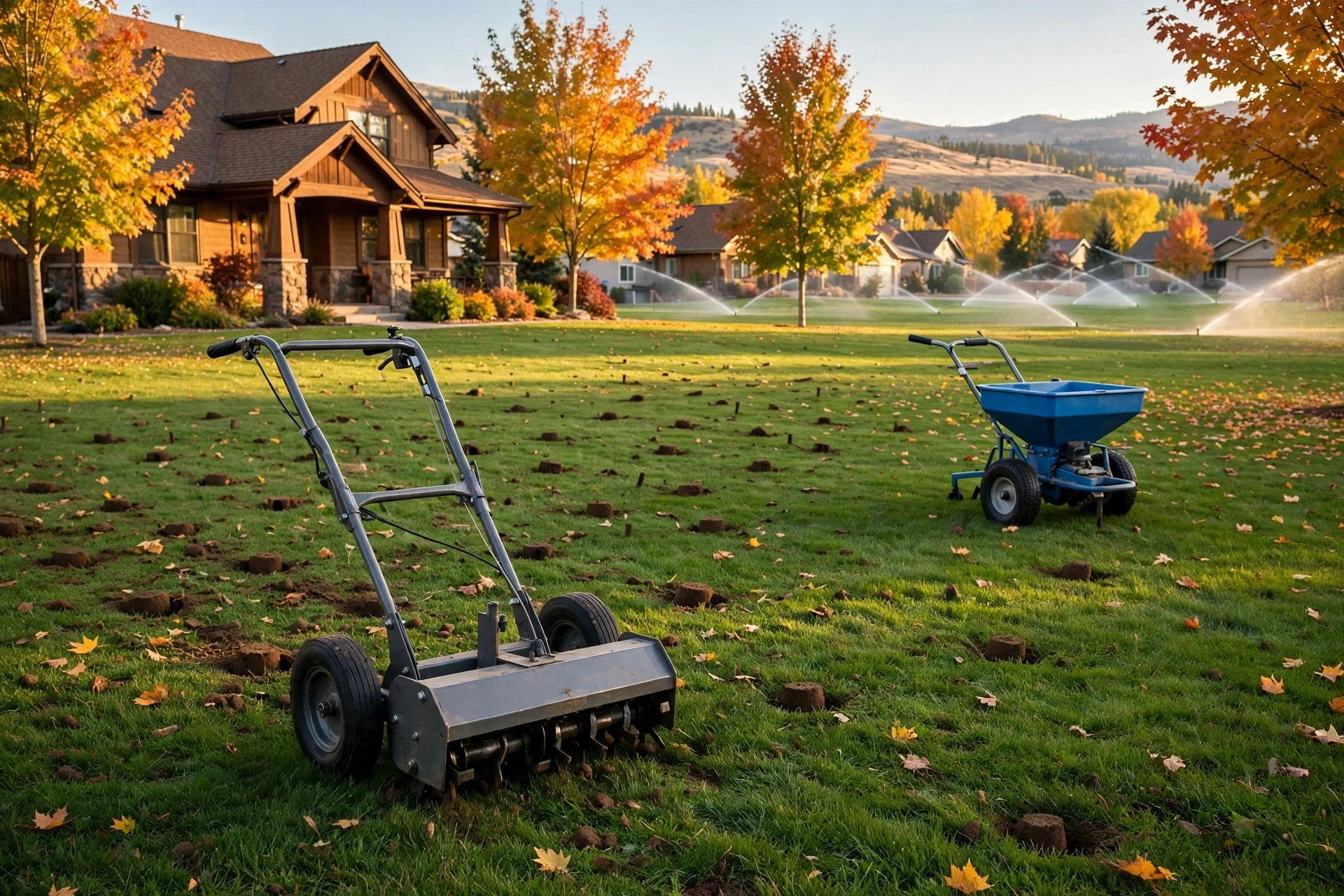
When to aerate and overseed Eagle Idaho lawns comes down to this: late summer to early fall is generally the most favorable window for cool-season grass. University of Idaho Extension says the best time to seed cool-season grasses in Idaho is late summer and fall. Soil is still warm, summer weeds are fading, and seedlings avoid the stress of summer heat.
No single date fits every lawn, though. The right week depends on temperatures, soil moisture, grass type, whether your irrigation is still running, and how much time new grass has to establish before winter. This guide covers how to judge your window, what to do if you’ve missed it, and the steps and aftercare that give seed its best chance.
Why Late Summer to Early Fall Works for Eagle Lawns
Kentucky bluegrass, tall fescue, and perennial ryegrass are cool-season grasses. They grow fastest in spring and early fall, which is when they recover from aeration and put down roots.
Fall seeding also has timing advantages over spring:
- Soil temperatures favor germination.
- Competition from summer annual weeds is lower.
- Seedlings can root before winter instead of facing summer heat.
- Aeration holes are less likely to sprout weeds, according to a Boise fall lawn guide.
For aeration, University of Idaho Extension calls fall the optimum time, with early spring acceptable. Boise-area guides often point to late September into early October for aerating and overseeding, but those are general patterns, not promises for your yard.
Why Irrigation Shutoff Matters More Than the Calendar
New seed needs steady moisture. University of Idaho Extension recommends light, frequent irrigation to keep the surface moist during germination. Many sources suggest this goes on for roughly the first few weeks.
In the Treasure Valley, that means your irrigation schedule can limit your window. Irrigation districts typically turn water on around April, and local sources put the end of the season anywhere from mid-September to mid-October, depending on the district. Some years bring early shutoffs.
Before you plan anything, find out when your irrigation is scheduled to stop. If there are fewer than two or three weeks of water left, seeding now may be risky.
A Seasonal Timing Guide
The table below sums up when to aerate and overseed Eagle Idaho lawns across the year. Use these windows as patterns, not deadlines. Your lawn and your irrigation schedule decide the actual date.
| Window | Conditions | What works well | Trade-offs |
|---|---|---|---|
| Late summer to early fall | Soil still warm, nights cooling, irrigation running | Aeration and overseeding together; seed has time to root before winter | Needs frequent light watering; avoid extreme heat |
| Mid fall | Cooler soil, irrigation shutoff approaching | Aeration; overseeding only if you can keep seed moist | Slower germination, especially Kentucky bluegrass; less time to establish |
| Early spring | Soil thawed and workable, cool temperatures | Aeration; light overseeding of thin areas | Crabgrass pre-emergent can block seed; warm weather arrives quickly; more watering later |
| Summer | Hot, dry conditions | Generally not ideal for new seed | Seedlings grow slowly in heat and need more frequent watering |
Quick Checks Before You Commit to a Date
Ask yourself these before you buy seed or book a service:
- Is your irrigation still on, and for how long?
- Is the soil moist but not soggy? Extremely dry or wet soil is a poor time for aeration.
- Have you used a crabgrass preventer recently? Pre-emergent products can block germination, so check the label.
- Is the lawn stressed or drought-damaged? Fix watering problems first.
- How much time is left before cold weather? Slow-germinating grass needs more runway.
If you answer “no” to the first question or “yes” to the fourth, the better move may be to wait.
If You’re Running Late
Say it’s mid-October and you haven’t aerated or overseeded. You have a few reasonable options:
Wait for spring. Early spring is an acceptable alternative for aeration. Plan around pre-emergent timing if you want to seed.
Aerate only, if conditions allow. Aeration doesn’t require seed, and moist soil is still workable.
Hold off on seed if water is ending. Seed that dries out during germination often fails.
Ask a local professional. They can judge your lawn and your district’s irrigation schedule.
A rushed seeding in poor conditions usually costs more than waiting.
Do You Need Both Aeration and Overseeding?
Not always. They solve different problems.
| Aeration | Overseeding | |
|---|---|---|
| Main job | Opens compacted soil | Adds new grass to thicken turf |
| Helps with | Water, air, and root movement | Thin or patchy grass |
| Useful when | Soil is compacted or thatch is heavy | Turf is thin or worn after summer |
| Works alone? | Yes, if turf is dense | Often, but contact with hard soil is poorer |
| Together | Holes protect seed and improve soil contact | Seed fills in thin areas |
Core aeration removes small plugs of soil. Seed that falls into those openings has better contact with the soil. If your soil drains well and isn’t compacted, you can often overseed without aerating first. Thin grass can also come from irrigation gaps, pests, disease, shade, or pet damage, so check those first.
For how to recognize compaction before you aerate, see our guide to the signs your lawn needs aeration.
The Steps, in Order
1. Check for thatch. If there’s a thick layer of dead grass at the surface, dethatch before aerating.
2. Mow before you start. Mow slightly shorter than usual, but don’ scalp the lawn.
3. Water the lawn first. University of Idaho Extension suggests irrigating about two days before aeration. Mark sprinkler heads and shallow lines.
4. Core aerate in two directions. Make two perpendicular passes, and leave the soil plugs on the lawn. They break down on their own.
5. Spread seed soon after aerating. Do it while the holes are open. Follow the seed label for rates.
6. Apply starter fertilizer. Practices vary on fertilizer timing, so a professional can advise what suits your lawn.
7. Water right away. Then follow the watering plan below.
Choosing Seed for Your Lawn
Buy high-quality seed with a high germination rate and minimal weed seed. University of Idaho Extension recommends at least 85 percent germination.
Kentucky bluegrass: Common in Idaho and cold hardy. It germinates slowly, often taking weeks, especially in cool soil.
Tall fescue: Tolerates heat and drought well, and it is more of a valley option.
Perennial ryegrass: Germinates fast and is often included in blends to speed up early greening.
Mixed lawns: Match the seed to what’s already growing. Tall fescue can be overseeded into bluegrass, but its wider blade may look uneven.
Watering and Caring for New Grass
New seed needs different watering than established turf. Think in phases:
Germination: Keep the surface consistently moist with light, frequent watering.
Seedlings: As grass fills in, water more deeply and less often.
Transition: Return to a normal schedule as the lawn establishes.
Heavy clay soils can shed water. University of Idaho Extension suggests applying water in small amounts with breaks in between so it soaks in rather than running off.
Mowing: Sources disagree on exact timing. A reasonable approach is to wait until seedlings are tall enough, and avoid scalping them.
Weed control: Avoid herbicides on new seeding. University of Idaho Extension advises waiting until the new grass has been mowed at least four times.
Traffic: Keep foot traffic off new grass while it develops. Some sources suggest avoiding heavy use for two to three weeks.
Check at two weeks: If areas haven’t germinated, they may need loosening and reseeding.
Common Mistakes to Avoid
- Seeding when irrigation is about to shut off
- Skipping the soil moisture check before aerating
- Using weed or crabgrass products near seeding time
- Letting seed dry out during germination
- Applying seed without good soil contact
- Aerating or seeding a stressed lawn without fixing the underlying problem
- Expecting fast, uniform results
DIY or Professional?
Renting an aerator can work for a small, flat yard. The machines are heavy, and getting seed, fertilizer, and watering timed right takes planning. A professional brings the equipment and can match the timing to your lawn and irrigation schedule.
Whether you hire or do it yourself, results aren’t guaranteed, and they vary with weather, watering, and soil.
If you’d like help, you can request a professional lawn aeration and overseeding estimate from Eagle Lawn Care.
Questions worth asking before you book:
- Do you core aerate, and how many passes do you make?
- What seed blend do you use for my grass type?
- Do you mark sprinkler heads, or should I?
- Is starter fertilizer included?
- When do you recommend scheduling, given when my irrigation shuts off?
- What watering and mowing plan should I follow afterward?
Prices vary with lawn size, access, soil condition, seed, and add-on services, so an estimate is the most reliable way to get a number.
Frequently Asked Questions
Aerate first, then overseed while the holes are open.
Often, yes, if your soil isn’t compacted and drains well. Aeration improves seed contact on harder soil.
It can work. University of Idaho Extension says early spring is acceptable for aeration. Be careful with crabgrass preventers, which can block seed, and expect more watering as temperatures rise. For most Eagle yards, when to aerate and overseed Eagle Idaho lawns is still late summer to early fall.
Wait. University of Idaho Extension advises holding off on herbicides until the new grass has been mowed at least four times.
It’s possible, but the blades differ and the lawn may look uneven. Ask a local professional what suits your lawn.
Limit traffic while it develops. Some sources suggest avoiding heavy use for two to three weeks.
It depends on lawn size, access, soil, seed, and extras. Request an estimate for your property.
Pick Your Window, Then Protect It
When to aerate and overseed Eagle Idaho lawns depends on more than the season. Late summer to early fall is generally the most favorable window, but your soil moisture, grass type, irrigation schedule, and time before winter decide the best week for your property. If that window has passed, waiting for spring is often smarter than forcing it.
If you’d like a local professional to assess your lawn and timing, request an aeration and overseeding estimate from Eagle Lawn Care.